ONLINE APPLICATION
 SMU
 RECEIPT
 DIPLOMA
 Anti-Plagiarism System
 Library
 Webmail
 Contact
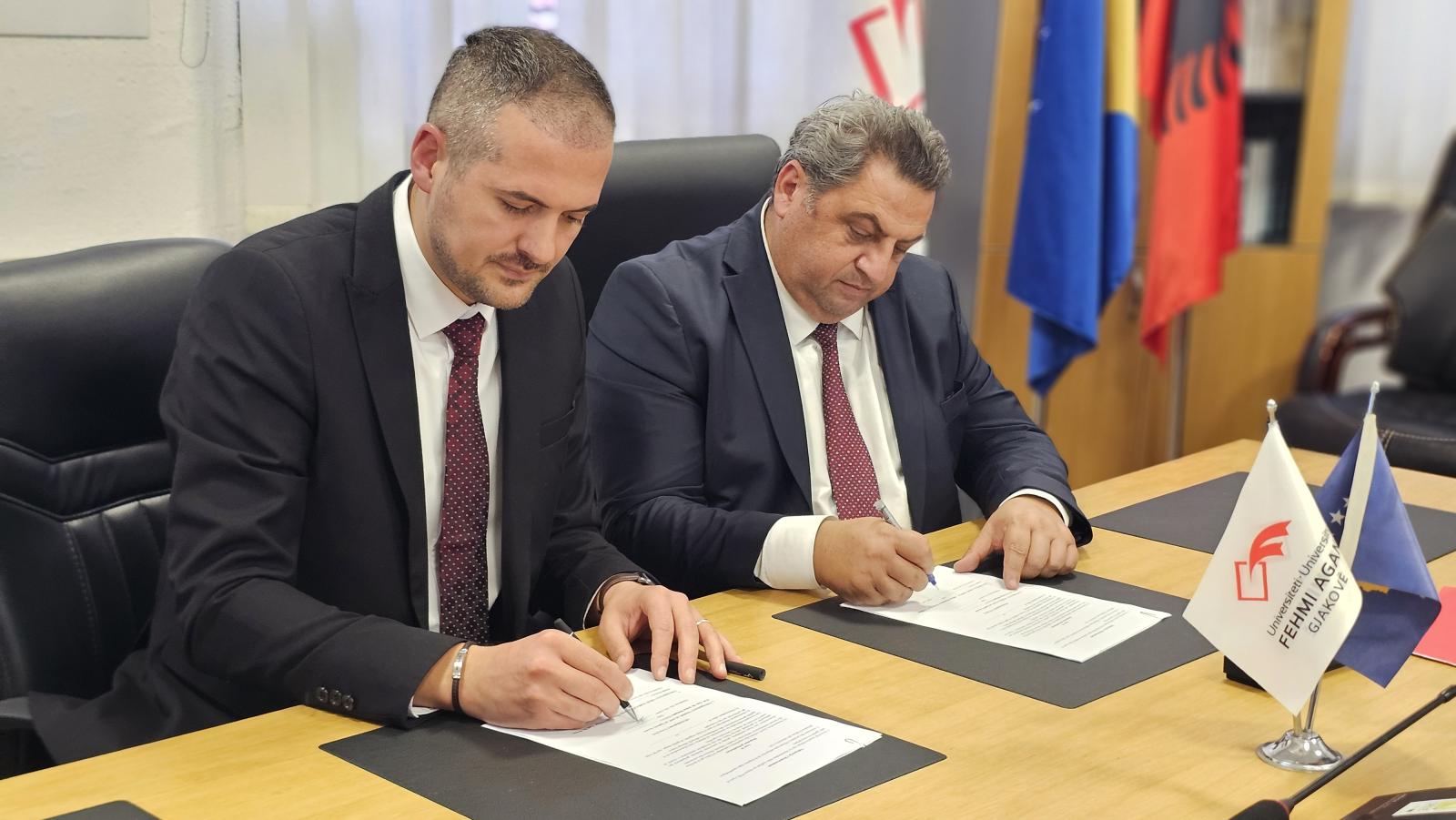
UFAGJ welcomes staff from “Mother Teresa” University in Skopje
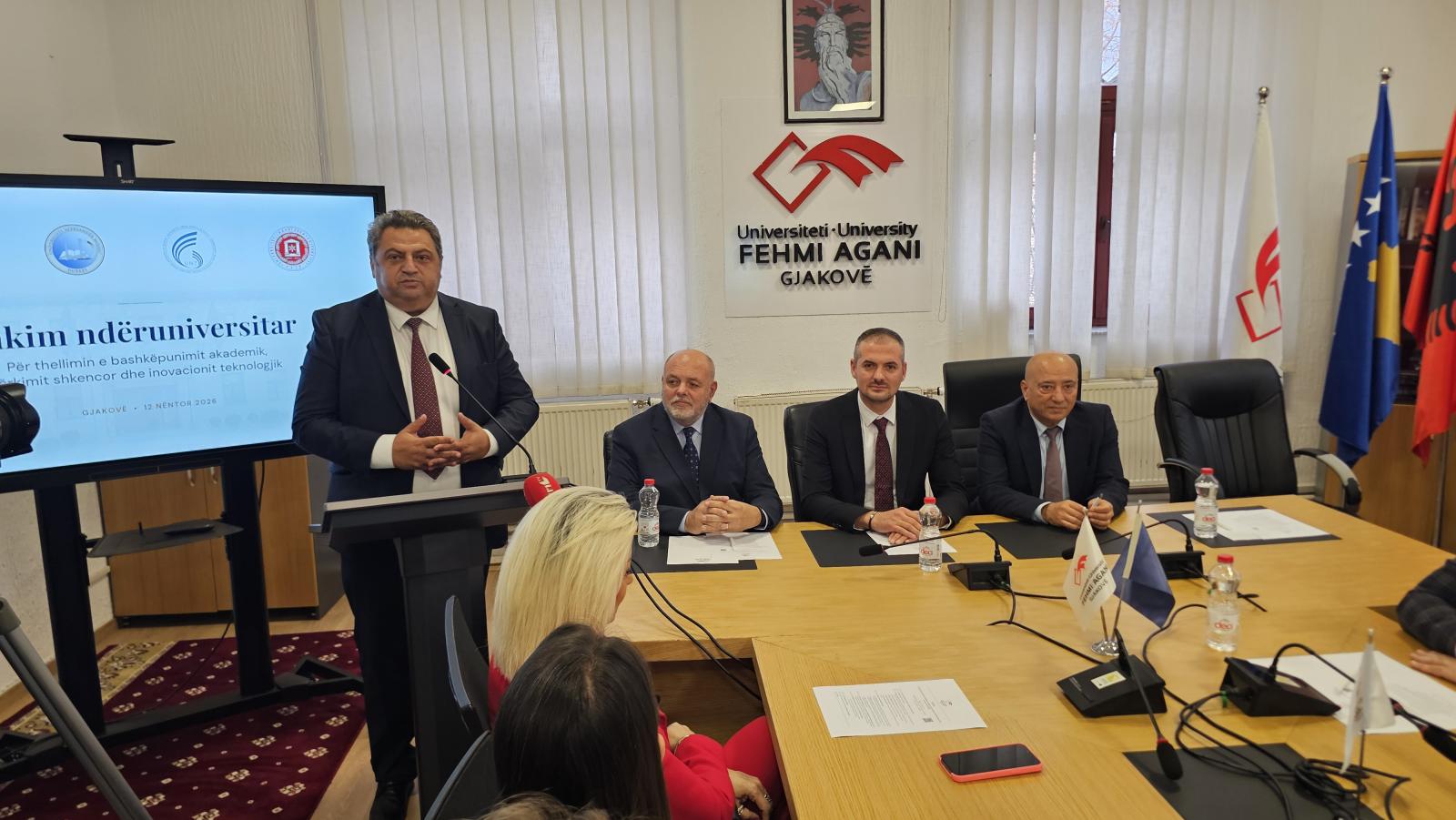
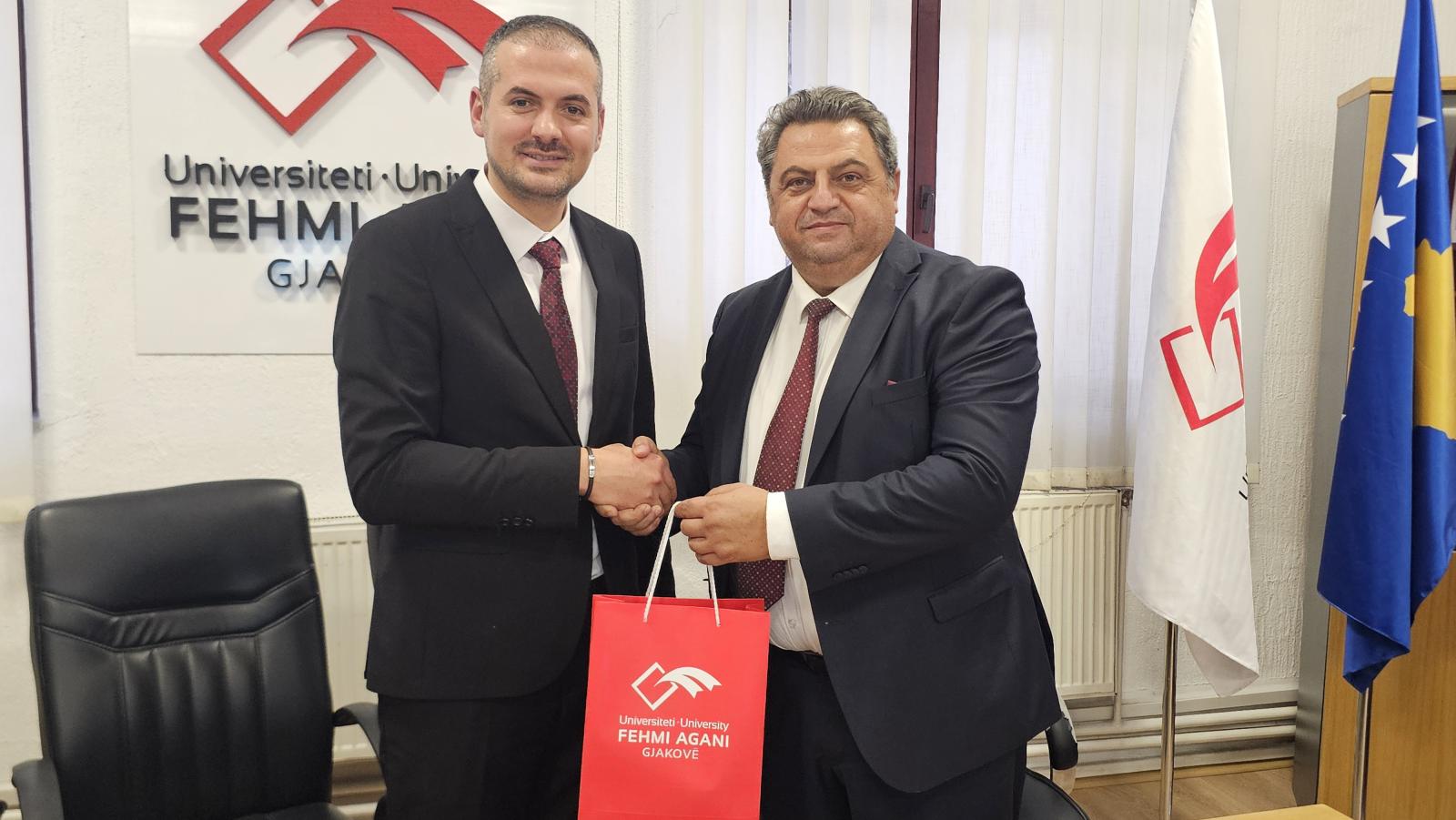
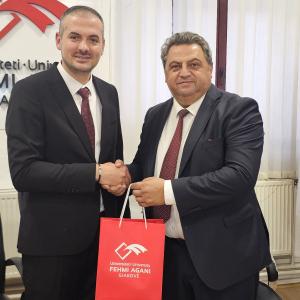
The University “Fehmi Agani” in Gjakova (UFAGJ) welcomed a delegation from the University “Nënë Tereza” in Skopje, headed by its Rector, Prof. Dr. Bekim Fetaji, as part of an institutional visit aimed at strengthening inter-university relations and expanding academic, scientific and institutional cooperation between the two higher education institutions. The delegation was welcomed by the Rector of the University “Fehmi Agani” in Gjakova, Prof. Assoc. Dr. Drilon Bunjaku, together with university representatives.
The meeting provided an opportunity to discuss prospects for long-term cooperation, the advancement of academic partnerships and the establishment of concrete mechanisms for implementing joint activities. During the meeting, the Rector, Prof. Assoc. Dr. Drilon Bunjaku, emphasized the importance of cooperation among Albanian-speaking universities, highlighting that the exchange of experiences, expertise and academic capacities represents significant potential for the development of higher education, scientific research and universities’ contribution to society. Meanwhile, the Rector of the University “Nënë Tereza” in Skopje, Prof. Dr. Bekim Fetaji, highlighted the importance of institutional cooperation and the need to translate relations between universities into concrete initiatives, research projects and new opportunities for students and academic staff.
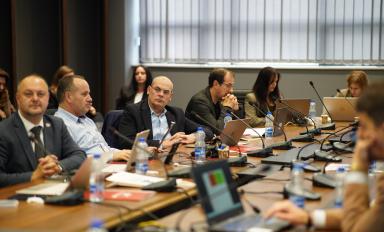
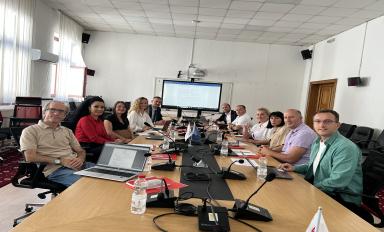
As part of the visit, a roundtable discussion was also organized, during which the leaders and representatives of both universities held joint discussions on priority areas of cooperation and opportunities for strengthening inter-institutional relations. The discussions focused on several key areas:
One of the priorities was expanding student and academic staff exchanges, organizing joint scientific activities, developing joint programmes, and exchanging experiences in teaching and quality assurance.
Particular attention was given to the use of digital technologies and Artificial Intelligence in higher education institutions. Participants discussed the opportunities offered by new technologies for improving teaching, research and administrative processes, as well as the challenges related to their effective and responsible integration.
The importance of exchanging good practices in quality assurance, advancing academic standards and strengthening institutional capacities was also addressed, as essential elements for the development and internationalization of universities.
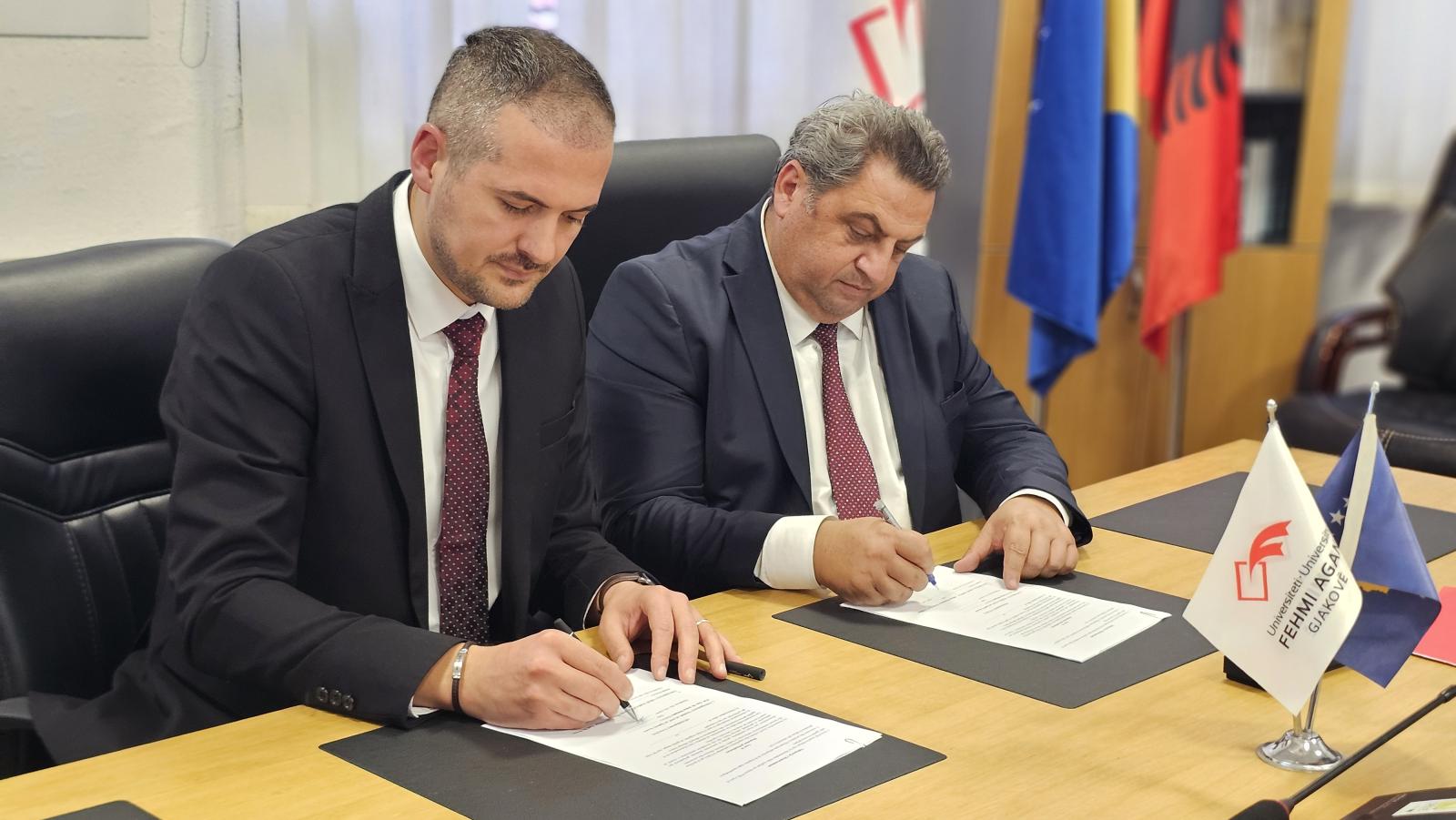
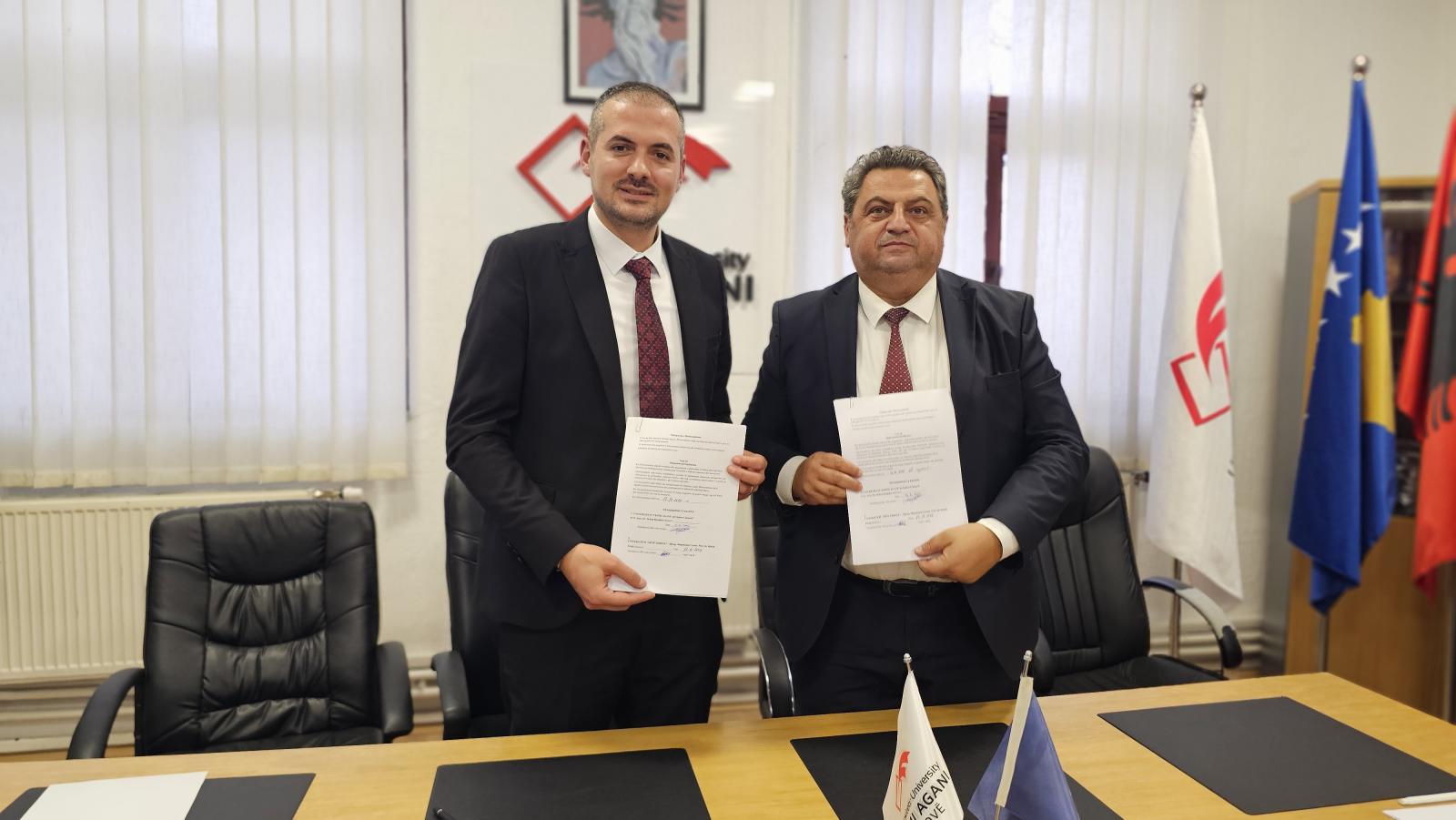
One of the most important moments of the visit was the signing of a Memorandum of Understanding (MoU) between the University “Fehmi Agani” in Gjakova and the University “Nënë Tereza” in Skopje. The Memorandum represents an important step towards formalizing and expanding cooperation between the two institutions, establishing a framework for the development of joint academic, scientific and institutional activities.
Through this Memorandum, the aim is to:
Expand student and academic staff mobility.
Exchange academic experiences and expertise.
Develop joint scientific research projects.
Organize conferences, seminars, workshops and other academic activities.
Cooperate in developing joint programmes and initiatives.
Exchange good practices in quality assurance and enhancement.
Encourage joint applications for international programmes and projects.
The signing of the MoU demonstrates the shared commitment of both institutions to translating cooperation into tangible results, creating new opportunities for the academic and student communities.
The visit of the delegation from the University “Nënë Tereza” in Skopje and the signing of the Memorandum of Understanding represent another step in the commitment of the University “Fehmi Agani” in Gjakova to expanding its network of regional and international partnerships. Through these collaborations, UFAGJ aims to create new opportunities for the professional development of students and academic staff, enhance research capacities, exchange experiences and improve the quality of higher education.
Both universities reaffirmed the importance of maintaining institutional communication and translating the agreements into concrete activities and projects that contribute to the development of higher education, scientific research and innovation in the region.
.png)